Why dark colours fight back
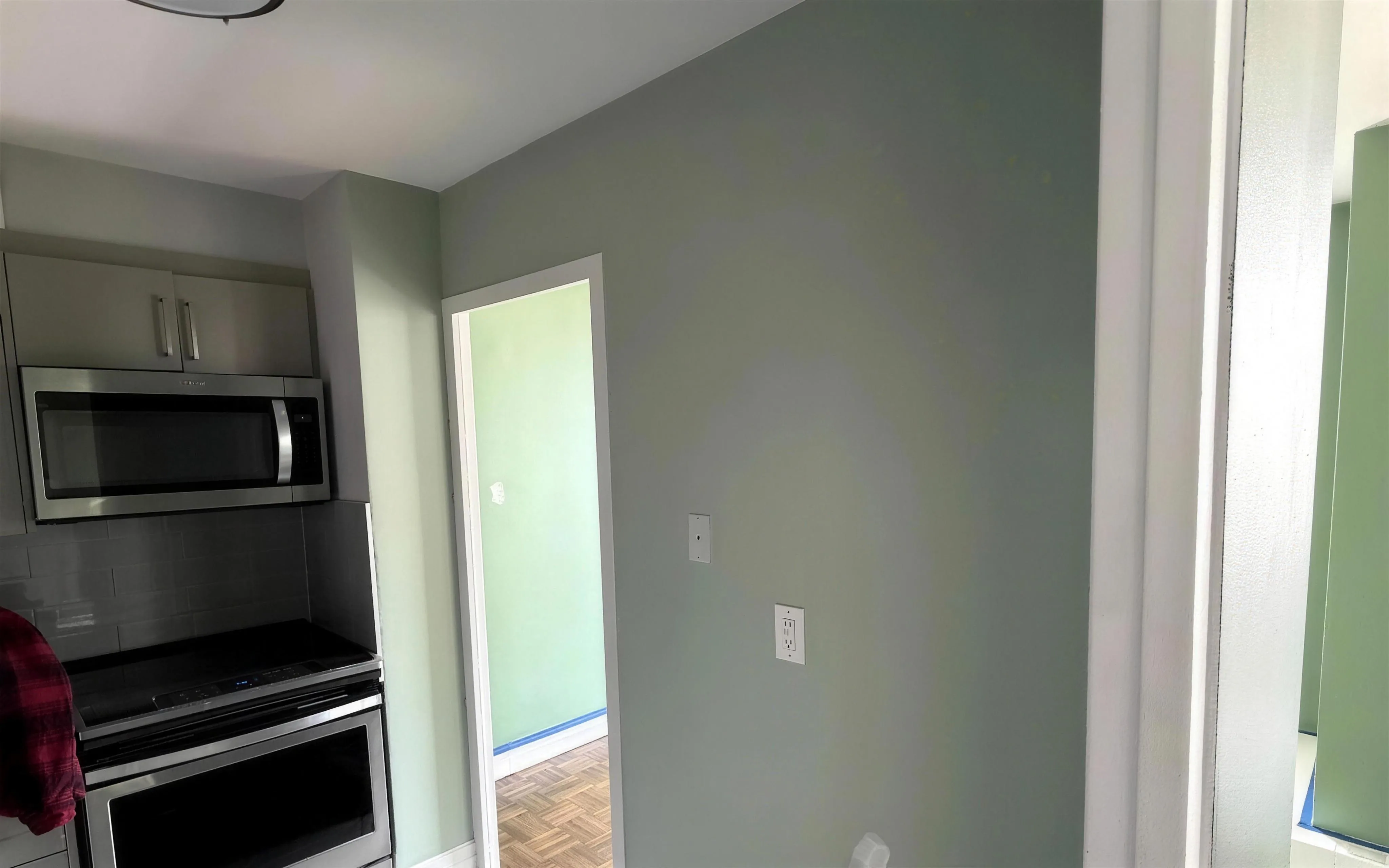
Saturated colours carry a lot of pigment. A light top coat laid straight over them lets that colour read through, so the wall ends up patchy or slightly tinted no matter how carefully it is rolled.
The usual response is to keep adding coats. That wastes paint and time, and it still often leaves a visible difference under strong daylight or overhead lighting.
Prime to block, not to cover
The fix is a primer chosen for the job. On a dark wall, a high hiding primer, often tinted toward the final colour, blocks the old colour in one step so the finish coats only have to deliver the new colour and sheen.
Primer also evens out patched areas. Filler and bare drywall absorb paint differently from painted wall, which is why repairs can flash through as dull spots if they are not primed first.
The sequence that works
On a dark wall we follow the same order every time:
- Clean the surface so the primer can bond.
- Fill, sand and caulk, then spot prime the repairs.
- Apply a full coat of blocking primer over the old colour.
- Finish with two coats of the new colour.
- Check the wall in daylight and under the room's own lighting before calling it done.
Worth doing properly
In a rental or condo turnover, a wall that shadows through is the first thing a prospective tenant or buyer notices. Getting the preparation right costs less than a callback, and far less than repainting the room.